
Soft, sticky candy
Too high a relative humidity makes hard candy, toffee, jellies and gummies soft and sticky.
HARD CANDY · GUMMIES · SOFTGEL CAPSULES
Sugar pulls moisture from the air. In a humid climate, hard candy and gummies turn soft and sticky, and softgel capsules dry unevenly and stick together. A DZL desiccant rotor unit holds the low humidity these products need — levels an air conditioner or a normal dehumidifier cannot reach. Send your room size, temperature, target and product, and we reply with a model and a written quotation within 24 hours.
Quote within 24 hoursMOQ 1 unit · 1-year warrantyCustom voltage, 50/60 Hz
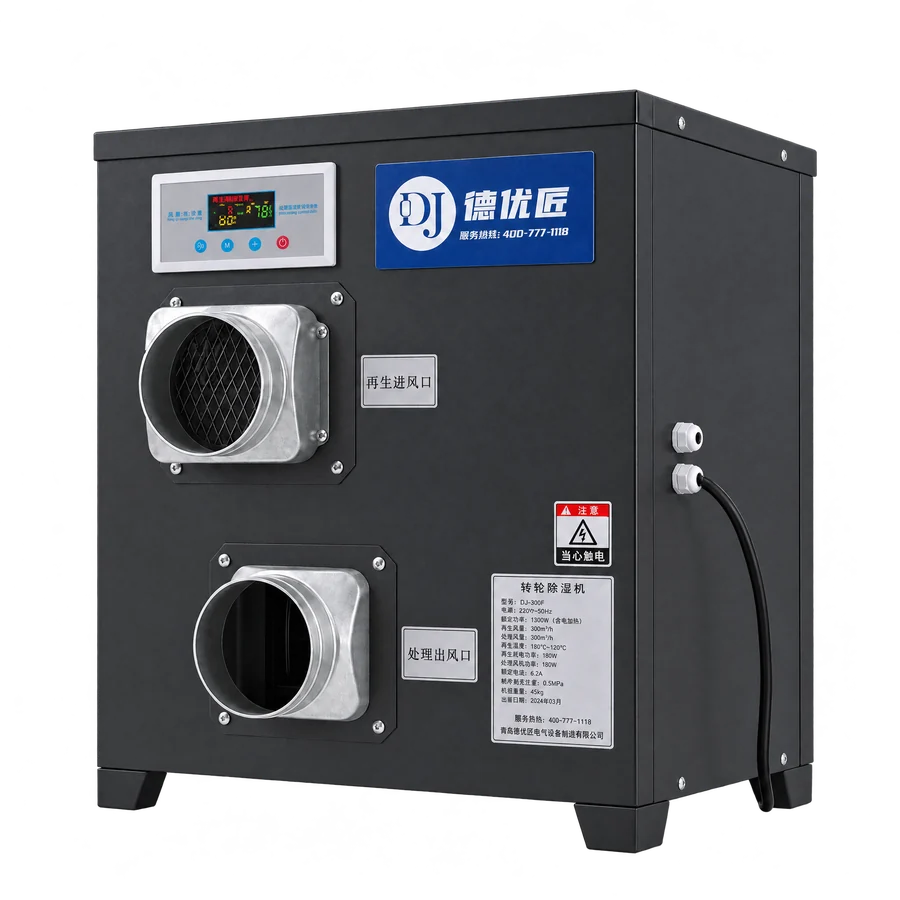
Compact models for small workshops, packing rooms and drying rooms
FOB, EXW or door-to-door delivery
Free spare parts for any problem within the warranty period
Every unit can be custom-built for your local power supply
THE PROBLEM
Confectionery is hygroscopic: when moist air meets sugar, texture and appearance suffer. In a tropical workshop the outdoor air is humid all year, so the problem shows up every day — on the line, in the packing room and in storage.
Too high a relative humidity makes hard candy, toffee, jellies and gummies soft and sticky.
Coated candies such as dragées can crack and crispy cookies soften when the room conditions are not right.
Sugar, flour and gelatin clump in storage and transport when exposed to humidity, which blocks hoppers and pipes.
Capsules must be dried gradually under controlled temperature and humidity; otherwise they stick to each other, turn brittle or stay too soft.
HUMIDITY TARGETS
Most of these targets sit well below what an air conditioner or a refrigerant dehumidifier can hold at normal room temperature. As a rule of thumb, a refrigerant unit is the cheaper answer around 45–50% RH; below that, a desiccant rotor is the right tool.
| Product | Typical target |
|---|---|
| Hard candy | Below 35% RH |
| Toffee | Below 35% RH |
| Jellies and gummies | 30–40% RH |
| Cookies | 30–40% RH |
| Marshmallows and nougat (production) | Around 50% RH |
| Dragées and pan work (production) | Around 50% RH |
| Soft gelatin capsule drying | 20–25% RH at 25 °C |
Honest check: if your room only needs around 50% RH at normal temperature, a refrigerant dehumidifier is usually cheaper to buy and to run — see the DS / DSG / DG range. Send your target and we will tell you which technology fits before we talk about price.
HOW A ROTOR UNIT SOLVES IT
A silica-gel rotor adsorbs moisture as vapour, so it holds low relative humidity at normal room temperature, where a refrigerant coil runs out of reach.
Dry air is supplied to the room where candy is cooled, wrapped and packed, so the surface stays dry and does not pick up moisture before sealing.
Dry air feeds the drying room or the capsule drying drums, so moisture leaves the product steadily instead of being held at the surface.
A heated regeneration stream re-activates the rotor and carries the moisture out through its own duct — no drain and no condensate in the room.
Electric regeneration is standard. Every unit can be custom-built for your local voltage, 50/60 Hz. Dry air leaves the rotor warmer than it entered, so tell us your room temperature limit and the selection takes it into account.
RECOMMENDED SMALL MODELS
These are the published figures for the compact and mid-size DZL models most often considered for small packing rooms, drying rooms and softgel lines. The final model depends on room volume, fresh air, the number of people and the target humidity.
| Model | Dehumidification* | Process airflow | Installed power | Published supply | Unit dimensions (L × W × H) | Weight | Link |
|---|---|---|---|---|---|---|---|
| DZL200 | 1.2 kg/h | 200 m³/h | 2.65 kW | 220 V / 50 Hz | 600 × 400 × 680 mm | 34 kg | Full data |
| DZL300 | 1.8 kg/h | 300 m³/h | 3.65 kW | 220 V / 50 Hz | 600 × 400 × 680 mm | 38 kg | Full data |
| DZL500 | 3 kg/h | 500 m³/h | 5.65 kW | 220 V / 50 Hz | 785 × 515 × 610 mm | 45 kg | Full data |
| DZL600 | 3.6 kg/h | 600 m³/h | 6.65 kW | 220 V / 50 Hz | 785 × 515 × 610 mm | 65 kg | Full data |
| DZL800 | 4.6 kg/h | 800 m³/h | 9.2 kW | 220 V / 50 Hz | 940 × 540 × 1200 mm | 110 kg | Full data |
| DZL1000 | 6 kg/h | 1,000 m³/h | 11.45 kW | 380 V / 50 Hz | 940 × 540 × 1200 mm | 160 kg | Full data |
*Published product data for preliminary evaluation. Dehumidification is stated at the published rating condition; at your room conditions the actual capacity is different, so we confirm the model against your temperature and target before quoting. Published supply: DZL200–DZL800 220 V / 50 Hz, DZL1000 and larger 380 V / 50 Hz — every unit can be custom-built for your local voltage, 50/60 Hz. Larger rooms: see the full DZL range.
SIZING IN FOUR ANSWERS
Four answers are enough for a first selection. A photo or sketch of the room helps even more.
Length × width × height of the packing room, drying room or line area you want to keep dry.
The temperature you keep the room at, and whether it has air conditioning.
The relative humidity you need. Not sure? Tell us the product and we will suggest a target with you.
Hard candy, gummies, softgels or another product — and the step: cooling, drying, packing or storage.
A model recommendation and a written quotation your team can act on — within 24 hours of receiving your parameters.
COMMON QUESTIONS
If your question is not here, send it with your parameters and we will answer it in writing.
Sugar is hygroscopic — it pulls moisture from the air. When the room humidity is too high, the surface of hard candy, toffee, jellies and gummies takes on water and turns soft and sticky. Lowering and holding the room humidity stops it.
Typical published targets are below 35% RH for hard candy and toffee, and 30–40% RH for jellies, gummies and cookies. Your recipe and process set the final target; tell us the product and we will agree it with you.
Typical conditions are about 25 °C and 20–25% RH for soft gelatin capsule drying, with moisture removed gradually so capsules do not stick together or turn brittle. Tell us your current drying set-up and we will size the dry-air supply for it.
Usually not for these targets. An air conditioner or refrigerant dehumidifier is the cheaper answer around 45–50% RH at normal room temperature. For 35% RH and below, a desiccant rotor is the right tool because it adsorbs moisture instead of condensing it on a cold coil.
It depends on room volume, fresh air, the number of people working in the room and the target humidity — not on floor area alone. Send the room size, temperature, target and product, and we reply with a model and a written quotation within 24 hours.
Air leaving a desiccant rotor is warmer than when it went in. Tell us the room temperature you need to keep, and whether the room has air conditioning, so the selection takes that into account.
Published supply is 220 V / 50 Hz for DZL200 to DZL800 and 380 V / 50 Hz for DZL1000 and larger. Every unit can be custom-built for your local voltage, 50/60 Hz.
Yes, the minimum order is 1 unit. The whole unit has a 1-year warranty with free spare parts for any problem within the warranty period, and the modular design with fault self-diagnosis lets a local technician swap a faulty module on site.
Humidity figures on this page are typical published values for general guidance; your product, recipe and process set the final target.
WORKSHOP SIZING
Room size, temperature, target and product — that is enough to start. Leave blank what you do not know yet; we will ask.
Prefer email? leo@hzdeyoujiang.cn