
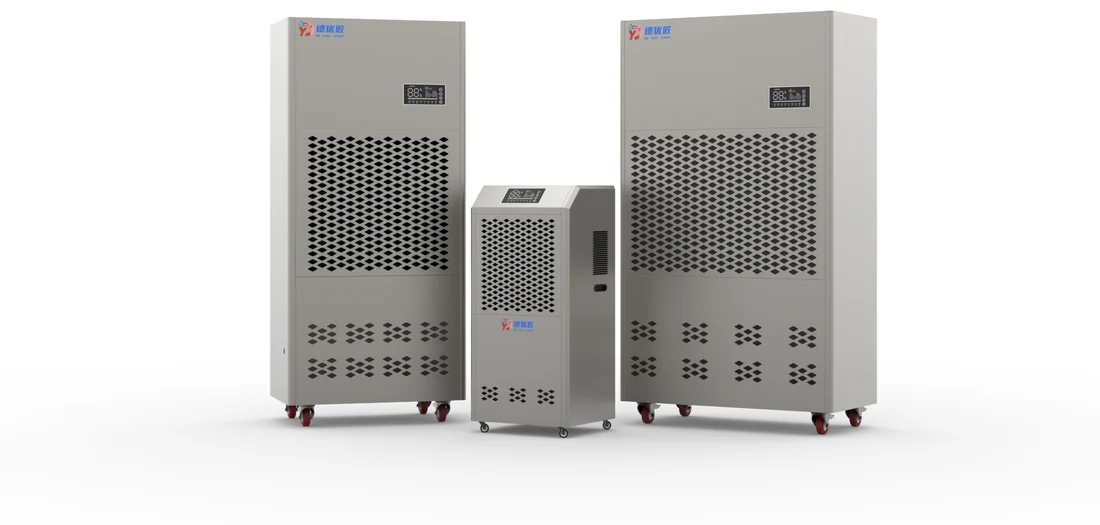
DY · DS · DW
Floor-standing
Warehouses, workshops and production floors. Cooling, heating and high-temperature variants on the same chassis.
−5 → +60 °C
Industrial dehumidification · Hangzhou, China
Four product lines — floor-standing, ducted, desiccant rotor and constant temperature & humidity — covering −5 °C cold rooms through +60 °C drying processes. Tell us the site, we size the unit.
01Product lines
On the floor, above the ceiling, in a rotor plant room, or in a cabinet holding ±1 °C — the line follows from the space you have. Every series below is built and tested on the same assembly route.
DY · DS · DW
Warehouses, workshops and production floors. Cooling, heating and high-temperature variants on the same chassis.
−5 → +60 °C
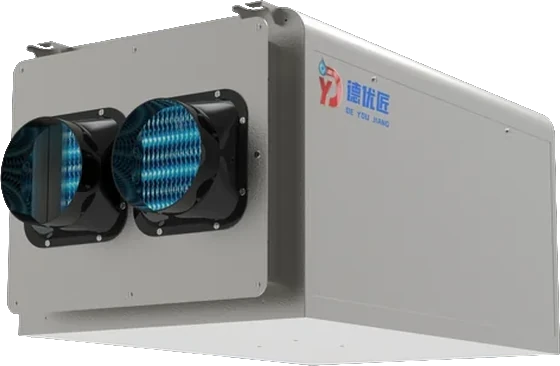
DYD · DYDB · DYDW · DX
Concealed above the ceiling or inside the duct run. Includes a quiet residential line published at 40 dB(A).
Zero floor footprint
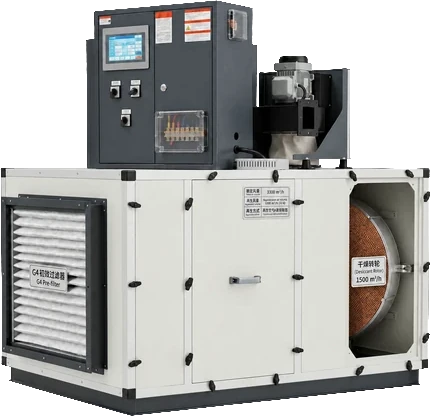
DZL
For low-dew-point duty where refrigerant coils stop removing moisture. Single-unit rotor systems.
Low dew point
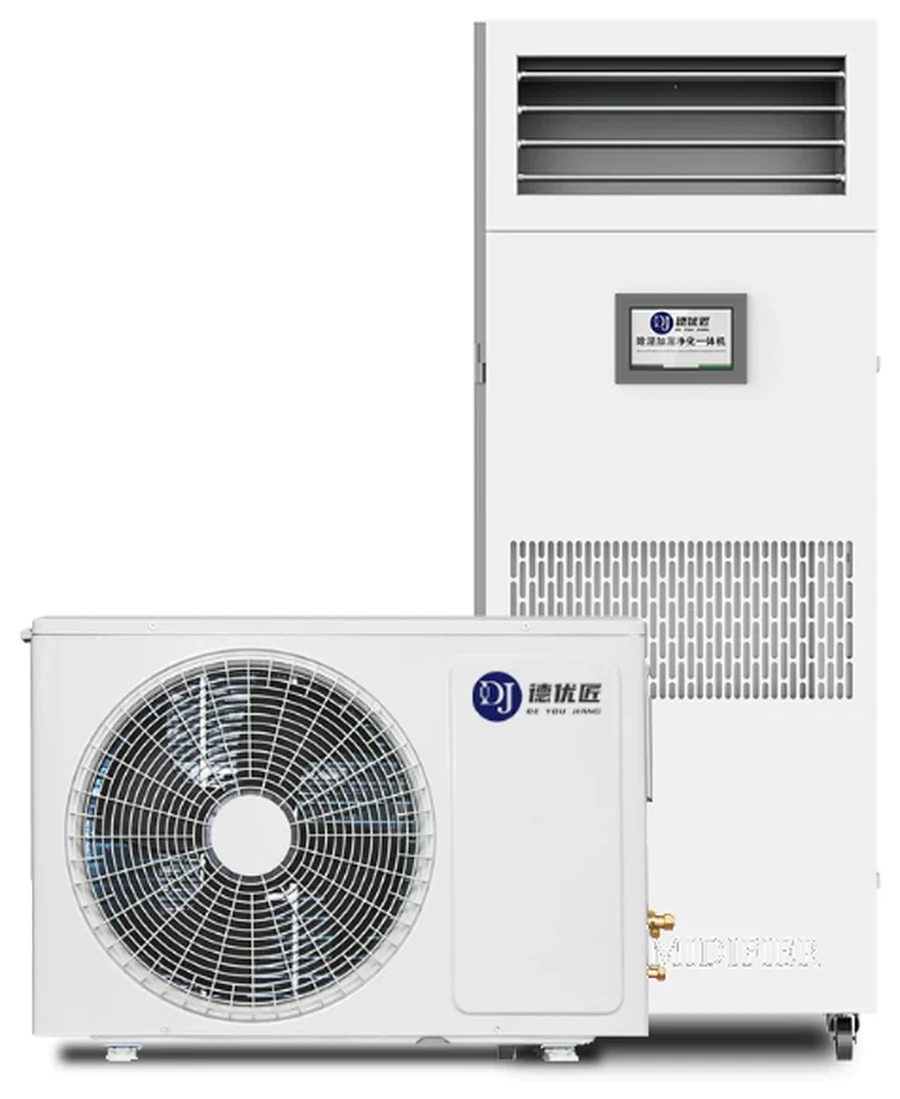
DSS · DSSD · DHS
Cooling, heating, humidifying and dehumidifying in one cabinet, held to ±1 °C and ±5 %RH. Cabinet or ceiling format.
±1 °C · ±5 %RH
02Your site
A litre-per-day figure behaves differently in a cold room, a fresh-air system and a drying line — which is why the same unit is re-rated for each. Find your condition here; the table below names the series.
Also specified forPharmaceutical & laboratoryBattery & electronicsArchives & museumsHazardous & corrosive areasAll applications
03Selection
You should not have to read four datasheets to find the right box. This is the mapping we use on the inside — locate the condition, take the series, then confirm capacity against room volume and air changes.
If the condition is not in this table, that is the conversation worth having.
Send the site conditions| Site condition | Series | Published capacity | What changes |
|---|---|---|---|
| Cold room, −5 to +5 °C | DYDW · DY low-temp | 156–600 L/day | Hot-gas defrost, low-temperature coil |
| Workshop, warehouse, 5–40 °C | DY · DYD | 90–600 L/day | Free-standing or ducted, same chassis |
| Ceiling void, tight clearance | DYDB · DYD | 28–156 L/day | 40 dB(A) published, Ø150 spigots |
| Drying & curing, +40 to +60 °C | DG · DSG · DYDG | 156–600 L/day | Heating stage, panel out of hot zone |
| Museum, archive, lab | DSS · DSSD | ±1 °C · ±5 %RH | Cabinet or ceiling, modulating control |
| Low dew point, below coil range | DZL rotor | By airflow | Desiccant wheel, no defrost cycle |
Capacity figures are published at 30 °C / 80 %RH. In a cold room or a drying line the same platform is re-rated at the duty point — that is what the quotation shows.
04At the edges
Almost every unit is sold on a duty figure taken at 30 °C and 80 %RH. Equipment rarely runs there. It runs at −5 °C with the door opening every ten minutes, or at +60 °C with the control box sitting next to the coil.
These are the three points where a catalogue build comes apart — and what changes in ours.
05In the field
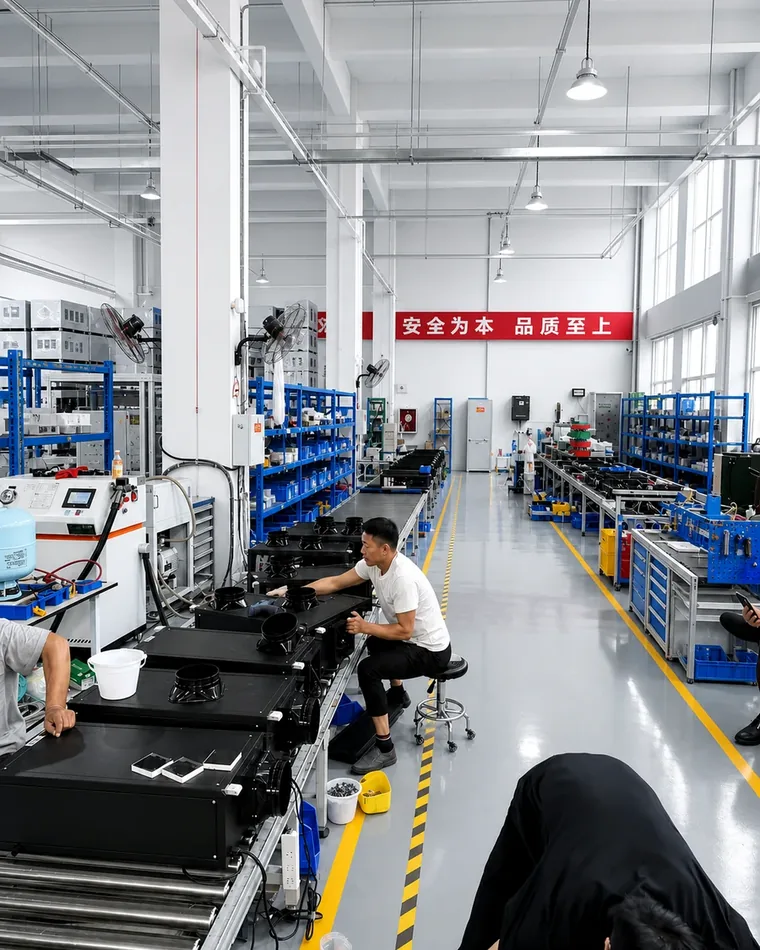
Twenty-four installations, photographed on site by the installer or our own engineer — plant rooms, ceiling voids, drying halls and controlled stores. Filter by product line, or open any frame to read it full size.
Every frame is a unit we supplied, photographed by the installer or our own engineer. Site names and client details are withheld by agreement — ask for a reference in your sector and we will put the project forward.
06Terms
A quotation that arrives late, or a lead time that moves after the deposit, costs more than the unit. These four are settled up front.
3–5 days
Finished units, run-tested for twelve hours and packed before you order. Dispatched three to five working days after confirmation.
20–25 days
Voltage, nameplate, packaging, documentation and non-standard configuration to your market. Three weeks from drawing approval.
8 years
Compressors, fans, controllers and sensors stay available for eight years after a model is phased out — matched by model and serial.
MOQ 1
Single units ship alongside mixed pallets. Sample orders and project quantities run through the same production and test route.
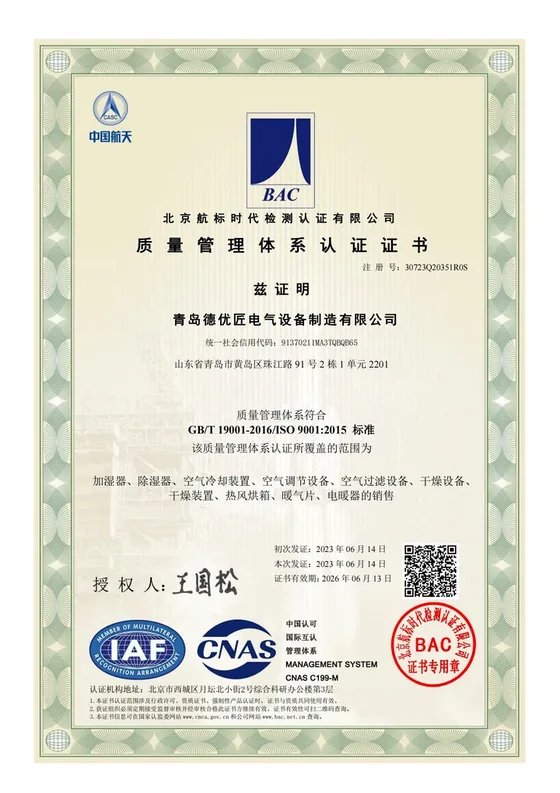
Most enquiries stall because the buyer needs a drawing or a certificate for an internal approval, not because the unit is wrong. Each order ships with its 12-hour test record, datasheet, dimensional drawing in DWG or PDF, and CE / QMS certificates matched to the model and destination.
Request the technical file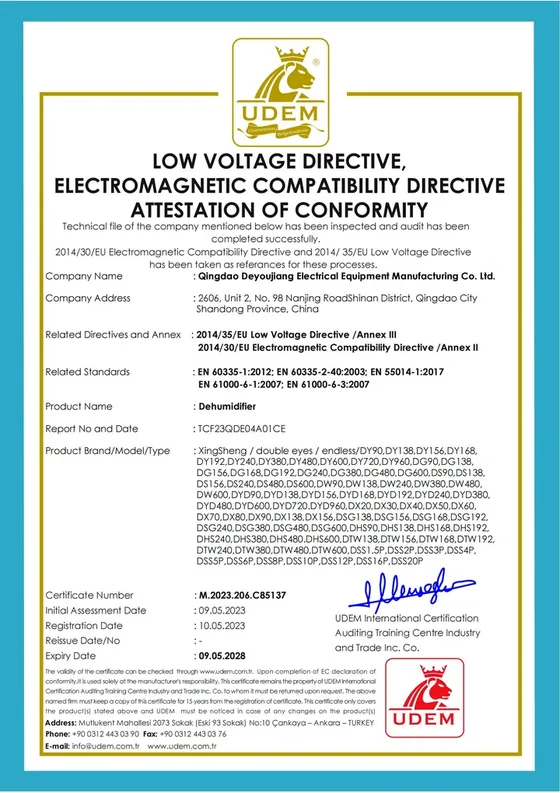
07Request
Room volume, moisture load, target RH and holding temperature. With those four we can size a unit and tell you which line it comes from. Missing inputs come back as questions, not assumptions.